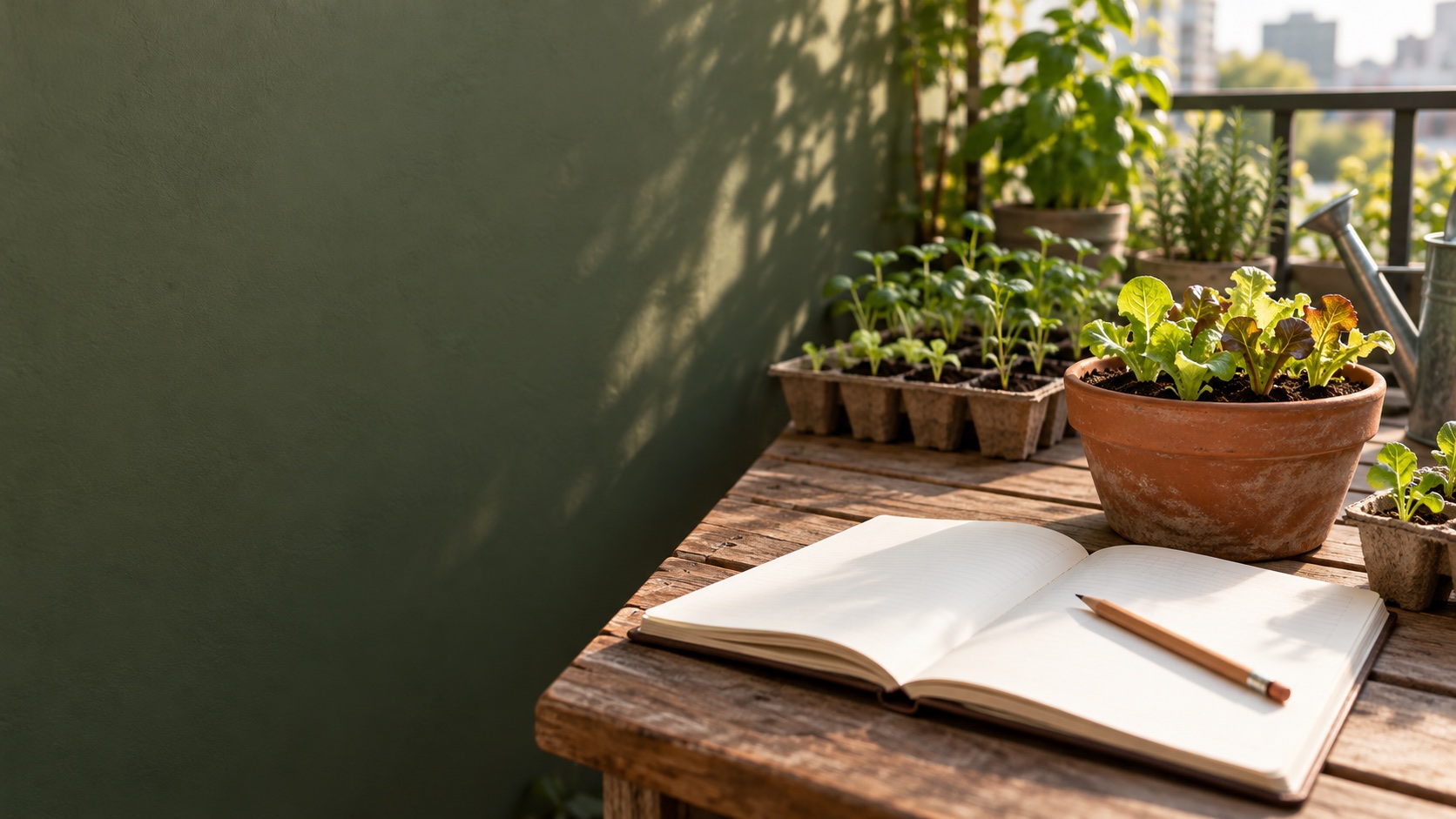
When Should You Move Seedlings to a Bigger Pot?
Move a seedling to a larger pot when its current cell is too small for the roots and the plant is not ready for its final location. There is no universal “day 14” rule. A tomato started early indoors may need a larger container; a radish sown directly in its final pot usually does not need transplanting at all.
A quick decision check
| What you see | What to do |
|---|---|
| One or two small seed leaves, no true leaves yet | Usually wait; keep light and moisture steady. |
| True leaves are developing, the cell dries unusually quickly, and roots hold the mix together | Check whether the seedling has outgrown the cell. If so, pot up. |
| Roots are circling densely or pushing through the drainage hole | Move to a slightly larger container before the roots become more crowded. |
| Outdoor planting is only a few days away and conditions are suitable | You may be better off hardening off and planting in the final location instead of adding another transplant. |
| Stem is long and weak but roots have room | More pot size alone will not solve insufficient light. Diagnose leggy seedlings first. |
The true leaves are the leaves that appear after the first seed leaves. They are a useful sign that the plant is developing, but they are not a command to repot every seedling immediately. The condition of the root ball and the time until final planting matter more.
How to pot up without damaging the stem
- Choose a clean container with drainage holes, about 1–2 inches wider than the current cell. A much larger pot can make moisture harder to manage around a small root system.
- Add fresh, pre-moistened potting mix. Make a hole large enough for the existing root ball.
- Lift the seedling from underneath with a spoon or plant label. Hold the root ball, not the stem. If you must steady it from above, touch a leaf gently.
- Set the root ball into the new container, fill around it, and firm the mix lightly. Do not crush the roots.
- Water to settle the mix and let excess water drain. Return the plant to adequate light; a larger pot does not replace light.
University of Minnesota Extension recommends moving seedlings that outgrow cell packs into containers 1–2 inches wider, and specifically warns against lifting a seedling by its stem. Its guidance also notes that larger seedlings need more space and often more light.
What about cucumbers, squash, and root crops?
Some crops dislike root disturbance. If you are starting cucumbers or squash indoors, use individual containers and transplant carefully. Radishes, carrots, and beets are generally better direct-sown in their final growing space rather than repeatedly potted up. Follow the instructions for the particular crop and variety instead of applying the tomato method to everything.
Questions growers ask
Do roots at the drainage hole always mean an emergency? No. One visible root is a prompt to inspect the root ball and watering pattern, not proof that the plant is doomed. Dense circling roots and a cell that cannot hold moisture are stronger signs.
Should I fertilize immediately after moving the seedling? Check your potting mix first; many mixes contain nutrients. Avoid adding a strong dose to a stressed seedling. Follow the fertilizer label and crop guidance.
Can I move a seedling directly outdoors? Only if the weather and soil suit that crop, and the plant has been gradually hardened off. Potting up indoors and moving outdoors are different decisions.
Sources
- University of Minnesota Extension: Starting seeds indoors — pot size, root-ball handling, crop differences, and hardening off.
- University of Minnesota Extension: Planting the vegetable garden — crops better direct-seeded and outdoor planting considerations.
Related: When to transplant seedlings outside · Seed starting mix vs potting soil.