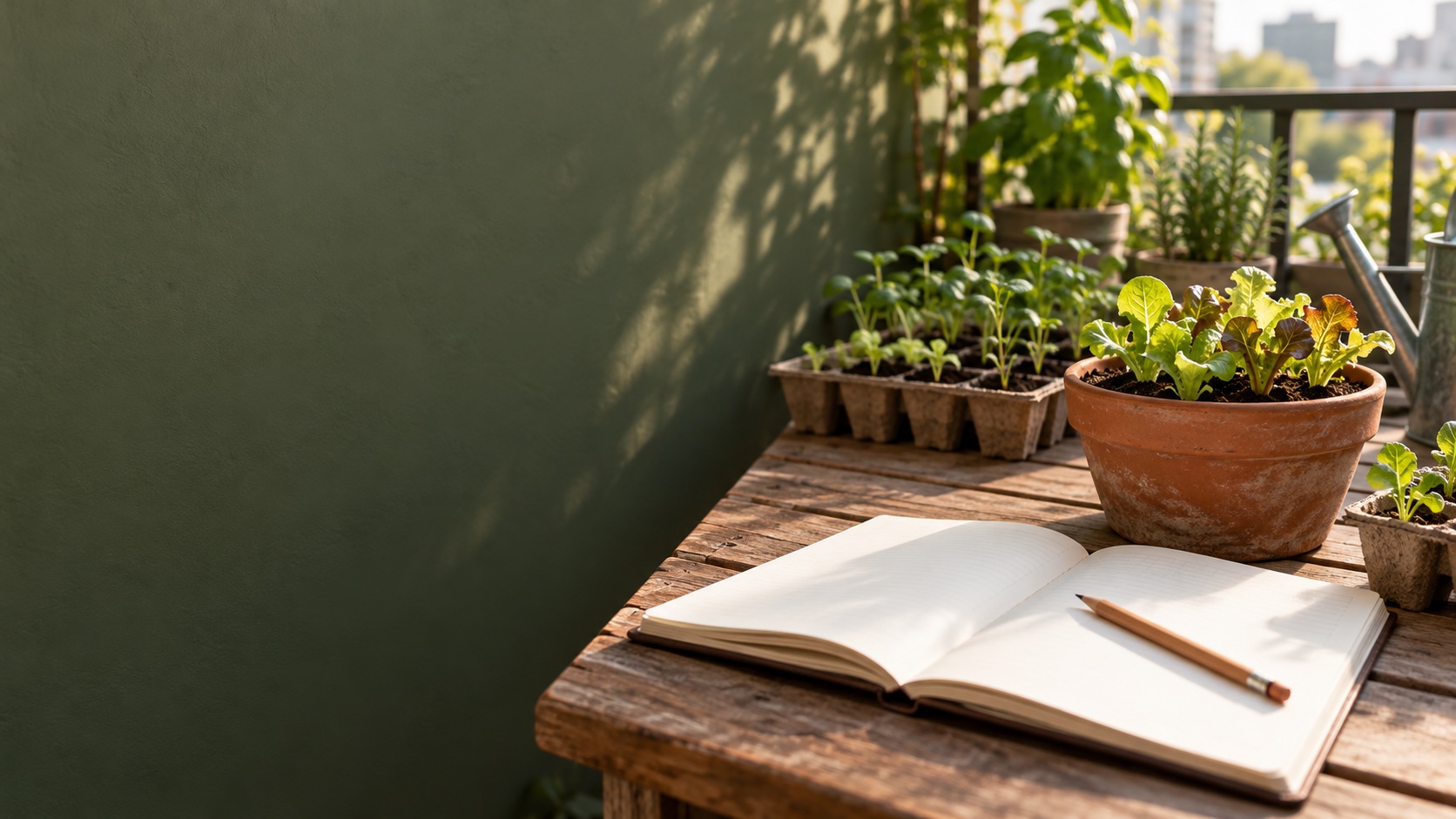
Windy Balcony Garden: Keep Pots Upright and Plants Growing
A tomato can have enough sun and water yet still struggle on an exposed balcony. Wind can topple a top-heavy pot, damage tender transplants, and dry the potting mix faster. The useful question is not “Is my balcony windy?” but which of those problems is happening? Each calls for a different fix.
Do a five-minute wind check
On a breezy day, stand where the pots actually sit. Look for leaves whipping against a rail, a trellis rocking in its pot, or a dry surface while the mix below is still damp. Check the same spot again after the sun moves. A corner protected in the morning may be exposed later.
| What you notice | First move | What to check next |
|---|---|---|
| Pot tips or stake leans | Move it closer to a sheltered wall; use a wider, heavier container | Keep drainage holes clear and confirm the balcony can safely carry the weight |
| New seedlings are battered | Move them to a sheltered position and expose them gradually | Follow a hardening-off routine before leaving them out all day |
| Leaves wilt on a hot, windy afternoon | Check moisture below the surface before watering | If the mix is moist, provide temporary shelter rather than repeatedly soaking it |
| Container dries unusually fast | Check it daily and water thoroughly when needed | Compare a porous pot with a less porous one; don’t use a fixed watering timetable |
Stabilize the plant, not just the stem
A stake cannot compensate for a narrow, lightweight pot holding a tall tomato. Choose a container sized for the mature plant, keep the support firmly anchored, and place the pot where it cannot fall onto people or a neighbor’s balcony. Heavy containers resist tipping, but wet potting mix is surprisingly heavy; check your building’s rules and load limits before adding large planters or fastening anything to a railing. Never put a loose wind screen where it could detach.
If wind is strong enough to rock the entire container, moving it to a protected position is more useful than tying the stem tighter. For tender transplants, a temporary, securely fastened fabric cover can reduce early-season wind exposure. Remove or adjust it as plants establish and as weather changes.
Water after checking the mix
Hot wind can increase moisture loss, but a wilted leaf is not proof that roots are dry. Push a finger into the mix, or lift a small pot to learn its watered and dry weights. Water when the root zone needs it, until excess drains; do not leave the pot standing in water. Recheck exposed containers more often during hot spells. See our balcony watering guide for a setup that fits your space.
A sensible setup for the Small Space kit
Start the lettuce and radish containers in the most sheltered, bright position you have. Give the bush tomato and mini pepper a stable container and support before they become top-heavy. Keep basil out of the harshest wind while it establishes. This is a placement plan, not a claim that every balcony or season behaves the same way; watch your actual light, wind, and moisture conditions.
Further reading and viewing
- University of Maryland Extension: Growing Vegetables in Containers and Salad Tables — container stability, drainage, weight, and daily moisture checks.
- Penn State Extension: Container Vegetable Gardening — Four Keys to Success — container size and the trade-off between heavy and light pots.
- Penn State Extension: Garden Cover-Ups — temporary fabric protection for young plants.
Related: Container Size Chart · Hardening Off Seedlings · Small Space, Real Food.